
Uniform procurement can become complicated when businesses manage multiple suppliers, fabric types, colours, sizes, and delivery schedules. This is especially true for companies with large teams or operations across different locations in Saudi Arabia. Working with a reliable bulk uniform fabric supplier can simplify the entire process.
Businesses can source suitable fabrics, maintain consistent quality, standardise employee uniforms, and manage recurring orders through one supply partner. A structured procurement approach also helps reduce delays and makes future replenishment easier. From corporate offices and hospitals to hotels, schools, and industrial facilities, the right Bulk Uniform Fabric Supplier in Saudi Arabia can make uniform procurement more organised, predictable, and efficient.
Why Uniform Procurement Can Become Complicated
Uniforms are more than a simple clothing purchase. Businesses must consider employee roles, working conditions, brand guidelines, comfort, durability, colour consistency, and expected usage. For example, a hospitality company may need elegant fabrics that maintain their appearance after frequent washing. An industrial business may require stronger materials for demanding working environments.
Healthcare organisations may need fabrics with specific hygiene and performance characteristics. Managing these requirements through different suppliers can create unnecessary complexity. A bulk uniform fabric supplier can bring these requirements together under one procurement process.
One Supplier Can Reduce Procurement Complexity
One of the biggest advantages of working with a Bulk Uniform Fabric Supplier in Saudi Arabia is centralised purchasing. Instead of contacting different suppliers for corporate shirts, industrial uniforms, healthcare fabrics, or hospitality garments, businesses can work with one textile partner. This creates a more organised procurement workflow.
A supplier can understand the company’s requirements and provide fabric recommendations based on the intended application. Businesses can then standardise their fabric specifications across departments and locations. DressCode, for example, serves multiple sectors including corporate, healthcare, hospitality, education, and industrial businesses. Its product range includes dedicated fabric categories for these applications.
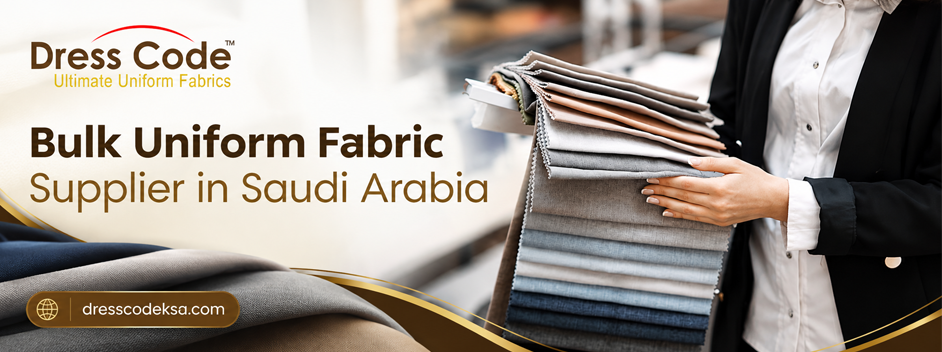
Easier Fabric Selection
Choosing the right fabric is one of the most important parts of uniform procurement.
Businesses need to evaluate factors such as:
- Fabric durability
- Color fastness
- Shrinkage resistance
- Comfort
- Breathability
- Maintenance requirements
- Work environment
- Overall appearance
A specialised supplier can help procurement teams compare these factors before placing a large order. This is particularly useful when businesses are purchasing thousands of meters of fabric. A wrong material choice can affect employee comfort, garment performance, and replacement cycles.
DressCode states that its fabric batches undergo testing for characteristics such as colour fastness, shrinkage resistance, and durability.
Better Consistency Across Multiple Locations
Large organisations often operate from several branches. Maintaining the same uniform appearance across every location can become difficult when fabrics are purchased from different sources. A centralised bulk procurement model helps solve this problem. Businesses can establish approved fabric specifications for each uniform category. These specifications can include fabric composition, colour, weight, finish, and other requirements.
Once these standards are established, future orders can follow the same specifications. This helps create a consistent visual identity across offices, stores, hotels, hospitals, schools, and other facilities. Consistency also makes it easier for procurement and HR teams to manage employee replacements.
Bulk Purchasing Makes Planning Easier
Uniform requirements are rarely limited to one order. Employees join and leave. Uniforms become worn. Companies open new locations. Seasonal requirements change. Businesses may also introduce new departments or job roles.
A bulk uniform fabric supplier can support recurring procurement instead of treating every order as an isolated purchase. Companies can plan their fabric requirements based on workforce size and expected replacement needs. This creates a more predictable procurement cycle. DressCode specifically states that it supports large-scale wholesale, institutional procurement, and recurring supply contracts.
Custom Fabric Sourcing for Specific Requirements
Not every business needs an off-the-shelf fabric. Some organisations have specific requirements relating to colour, texture, performance, or brand identity. A supplier with custom sourcing capabilities can help businesses identify or develop materials suited to these needs. For example, a luxury hotel may want a refined fabric that supports its premium visual identity. An industrial company may prioritise durability and functional performance. A school may focus on comfort and repeated washing.
Custom sourcing allows the procurement process to start with the actual business requirement rather than forcing the organisation to select from a limited standard range. DressCode states that it offers customised fabric specifications, colour options, and specialised textile recommendations based on industry requirements.
Improved Supply Chain Coordination
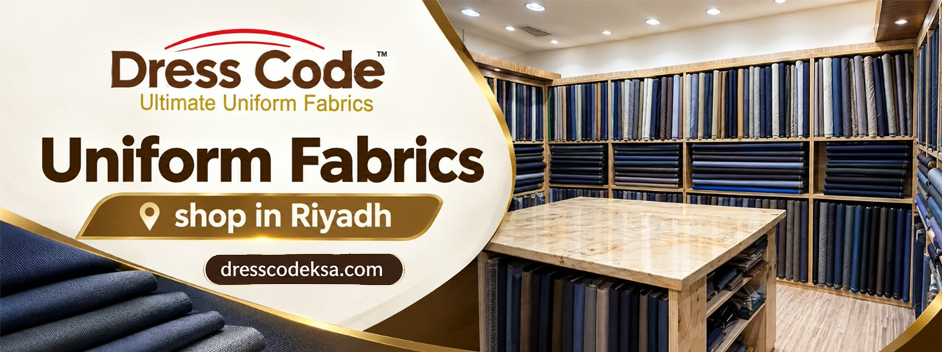
Procurement becomes more challenging when several parties are involved. A business may have one supplier for fabric, another for garment production, another for customisation, and another for logistics. Communication gaps between these parties can lead to delays or inconsistencies. A Uniform Fabrics shop in Riyadh can become an important link in the supply chain.
With clearer specifications and planned deliveries, procurement teams can coordinate fabric availability with tailoring and garment production schedules. This becomes especially important for large uniform programs where even a small delay can affect hundreds or thousands of garments. Strategic distribution can also support faster fulfilment.
Quality Control Becomes More Structured
Quality problems can become expensive when purchasing uniforms in bulk. If fabric has inconsistent colour, excessive shrinkage, or poor durability, the issue can affect an entire production batch. Businesses may then face alterations, replacements, or production delays. A structured procurement process should therefore include quality checks before large-scale production.
Businesses should ask suppliers about fabric testing, batch consistency, sampling procedures, and quality standards. Approving samples before placing a major order can also help identify problems early. This approach gives procurement teams greater confidence before committing to a large production run.
Easier Budget and Inventory Planning
Centralised procurement can also make internal planning easier. When fabric specifications and suppliers are standardised, procurement teams can create clearer purchasing forecasts. They can estimate how much material is needed for current employees and expected future requirements. Companies can also maintain approved fabric references instead of starting the selection process again every time uniforms need to be replenished.
This reduces administrative work and makes repeat purchasing more straightforward. For businesses with large workforces, these small improvements can make a meaningful difference to procurement efficiency.
Choosing the Right Bulk Uniform Fabric Supplier
Businesses should evaluate more than the supplier’s product catalogue before entering a long-term procurement relationship. Important considerations include fabric quality, industry expertise, customisation capabilities, bulk-order capacity, supply consistency, quality assurance, delivery coverage, and communication. It is also useful to check whether the supplier understands the requirements of the specific industry.
A healthcare organisation and an industrial company may both require uniforms, but their fabric priorities can be very different. A supplier with sector-specific knowledge can provide more relevant recommendations. Businesses should also request samples before approving large orders. Testing the fabric under actual working and washing conditions can provide valuable insight into its suitability.
A Simpler Uniform Procurement Process
A well-organised procurement process can follow a straightforward structure:
- Step 1: Identify requirements: Define employee categories, quantities, uniform types, colours, and expected usage.
- Step 2: Select fabric specifications: Evaluate durability, comfort, appearance, maintenance, and application requirements.
- Step 3: Request samples: Review fabric quality and test samples before approving bulk production.
- Step 4: Establish approved specifications: Record the selected fabric, colour, specifications, and quality requirements.
- Step 5: Plan bulk procurement: Coordinate quantities and delivery schedules according to workforce and production requirements.
- Step 6: Establish recurring supply: Use the same specifications for future replacements and expansion requirements.
This process minimises unnecessary repetition while creating a consistent procurement system.
Bottom Line
Working with a Bulk Uniform Fabric Supplier in Saudi Arabia can turn a complicated purchasing process into a more organised and manageable system. Centralised sourcing helps businesses simplify fabric selection, maintain consistency, coordinate production, plan recurring requirements, and manage quality more effectively. It also gives procurement teams a single point of coordination for different uniform requirements across corporate, healthcare, hospitality, education, and industrial environments.
For businesses looking for premium uniform fabrics and structured bulk textile sourcing in Saudi Arabia, DressCode KSA provides sector-specific fabric solutions, custom sourcing, wholesale and institutional procurement, and recurring supply support across Saudi Arabia and the wider GCC. Our range covers corporate wear, healthcare uniforms, school uniforms, hospitality fabrics, industrial workwear, and fashion and tailoring textiles.
FAQs
- Why should businesses work with a bulk uniform fabric supplier in Saudi Arabia?
Working with a bulk uniform fabric supplier in Saudi Arabia can simplify procurement by providing consistent fabric specifications, centralised sourcing, quality control, and support for recurring orders.
- What should businesses consider when selecting uniform fabric?
Businesses should consider durability, comfort, breathability, colour fastness, shrinkage resistance, maintenance requirements, and the specific working environment.
- Can a bulk fabric supplier provide customised uniform fabrics?
Yes. Depending on the supplier, businesses can request customised fabric specifications, colours, finishes, and textile solutions based on their industry and uniform requirements.
- How does bulk fabric procurement improve uniform consistency?
Centralised procurement allows businesses to maintain approved fabric specifications across departments and locations. This helps create consistent colours, textures, and overall uniform appearance.
- Is bulk uniform fabric suitable for recurring business requirements?
Yes. Bulk suppliers can support recurring requirements for employee replacements, new hires, branch expansion, and regular uniform replenishment.
RAG
Simplifying Bulk Uniform Procurement
Businesses with large workforces often need uniforms in significant quantities and at regular intervals. Working with a bulk uniform fabric supplier in Saudi Arabia can simplify this process by centralising fabric sourcing and standardising specifications. Companies can establish approved materials, colours, and quality requirements, making future purchases easier to manage. This approach can also help procurement teams coordinate fabric availability with garment manufacturing and delivery schedules.
Choosing Fabrics for Different Industries
Uniform requirements vary significantly between industries. Healthcare organisations may prioritise comfort and easy maintenance, while industrial businesses may require durable fabrics suitable for demanding work environments. Hospitality companies may focus more heavily on appearance, comfort, and brand consistency. A specialised bulk uniform fabric supplier can help businesses select materials according to their specific operational requirements. Sampling and quality checks before bulk purchasing can further reduce the risk of unsuitable fabric selections.
Building a Consistent Supply Process
A standardised procurement system can make recurring uniform requirements more predictable. Businesses can maintain records of approved fabrics, colours, specifications, and quantities for future orders. This makes it easier to replenish uniforms when employees join, existing garments require replacement, or new locations open. By establishing a reliable supply relationship with a bulk uniform fabric supplier, organisations can streamline procurement while maintaining consistent uniform quality and appearance across their operations.